

Switching to an automated lawn care system can transform your weekend routine, saving hundreds of hours of manual labor. However, choosing the wrong machine for your specific property can quickly lead to stuck wheels, scalped turf, or missed cutting zones.
American yards present a unique set of challenges compared to European lawns: thick Warm-Season grasses (like St. Augustine and Zoysia), wide multi-zone footprints, steep slopes, heavy tree canopy cover, and unpredictable weather events.
Rather than chasing gimmicks or unverified marketing promises, use this expanded buyer guide to evaluate your lawn’s physical layout, navigate current technology options, and select a reliable mower that delivers a healthy, carpet-like lawn.
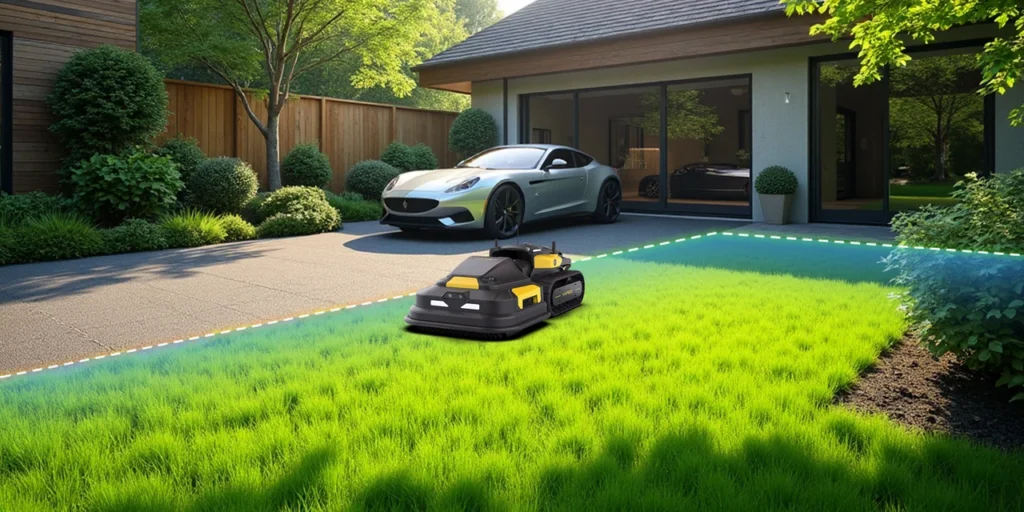
1. Map Your Yard Mechanics & Capacity
Before comparing individual models or software features, conduct a thorough audit of your physical property. Robotic mowers operate within strict physical parameters; exceeding them will lead to frequent manual interventions.
Acreage vs. Actual Mowing Area
A common mistake among buyers is purchasing a mower based strictly on their total property lot size.
- Calculate Mowing Turf Only: Subtract your house footprint, driveway, patio, swimming pool, and mulched flower beds. A standard suburban lot might be 0.5 acres, but the actual grass area requiring mowing might only be 0.25 acres.
- Apply the 20% Capacity Rule: Industry experts recommend buying a mower rated for at least 15% to 20% more surface area than your measured lawn. Running a mower at 100% maximum capacity constantly wears out the battery faster and leaves little room for schedule adjustments during peak spring growth spurts.
Incline, Slope, and Drive System
Slope handling determines whether a mower will maintain traction or slide downhill, destroying turf edges:
- Light Slopes (0% to 20% Grade): Standard Front-Wheel or Rear-Wheel Drive (RWD) units handle flat to gently rolling suburban lawns efficiently.
- Steep Terraces & Hills (20% to 45%+ Grade): If your lawn features steep ditch lines or retaining walls, select an All-Wheel Drive (AWD) or 4WD model. AWD units distribute power to independent wheels, preventing slippage on wet grass or loose topsoil.
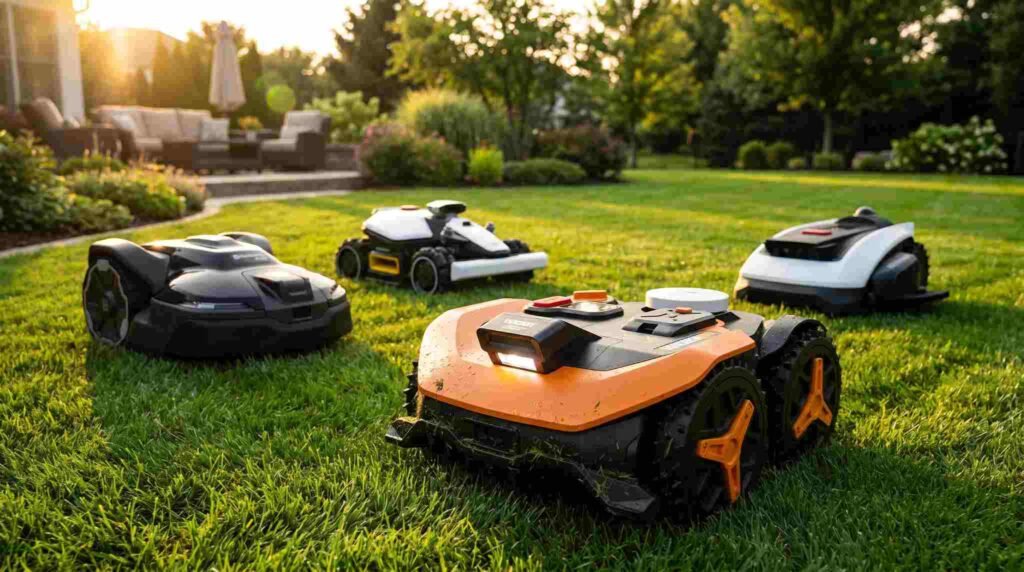
2. Decode Mower Navigation: RTK vs. Vision vs. Wire
Navigation technology forms the engine of any automated mower. Choosing the right system depends directly on your yard’s layout, fence boundaries, and tree canopy density.
                  ┌─────────────────────────────────┐
                  │ What is your primary terrain?   │
                  └────────────────┬────────────────┘
                                   │
         ┌─────────────────────────┴─────────────────────────┐
         ▼                                                   ▼
┌─────────────────────────┐                         ┌─────────────────────────┐
│ Open Sky / Clear View   │                         │ Dense Tree Canopy /     │
│ (Suburban Tract Homes)  │                         │ Complex Shadows         │
└────────┬────────────────┘                         └────────┬────────────────┘
         │                                                   │
         ▼                                                   ▼
┌─────────────────────────┐                         ┌─────────────────────────┐
│ Network RTK / GPS       │                         │ LiDAR / Vision-Fusion   │
│ High-precision, wire-   │                         │ Scans physical terrain; │
│ free line-of-sight path │                         │ unaffected by canopy    │
└─────────────────────────┘                         └─────────────────────────┘
| Navigation Type | Ideal Property Profile | Key Advantage | Trade-Offs & Considerations |
| RTK-GPS (Wire-Free) | Open yards with minimal overhead coverage and clear sky access. | High precision; creates uniform, parallel stripe patterns without perimeter wires. | Dense oak trees, heavy overhangs, or tall two-story walls can block satellite line-of-sight. |
| LiDAR / Vision-Fusion | Properties with heavy tree canopy, woods, or dark shadow zones. | Uses 3D laser scanning or AI optical cameras to navigate independently of satellites. | Camera lenses and optical glass require periodic cleaning to stay clear of dirt and pollen. |
| Physical Boundary Wire | Smaller, enclosed, low-complexity properties. | Highly reliable signal immunity; unaffected by trees, weather, or satellite drops. | Requires manual initial installation (pegging or trenching wire) and fixing accidental line breaks. |
3. Cutting Deck Torque & Regional U.S. Grass Types
Turfgrass variety heavily dictates motor requirements. Unlike fine European lawns, American grass types vary widely by climate zone:
- Cool-Season Grasses (Kentucky Bluegrass, Tall Fescue, Perennial Ryegrass): Common in the North and Midwest. These varieties grow rapidly in spring and autumn, requiring a recommended cutting deck height of 2.5 to 4.0 inches.
- Warm-Season Grasses (St. Augustine, Zoysia, Bermuda): Prevalent in the U.S. Sunbelt and Transition Zone. St. Augustine and Zoysia are thick, stolon-heavy grasses that create dense mats. Ensure the mower features a high-torque cutting motor that won’t bog down or stall when cutting through dense, humid growth.
Mulching Efficiency: Robot mowers do not collect clippings in a bag. Instead, tiny razor-sharp blades shave off millimeter-thin grass tips daily. These micro-clippings sink into the soil root zone, decomposing rapidly to return nitrogen nutrients naturally to the turf.
4. Safety Systems, Smart App Integration, and Security
Because robotic mowers operate outdoors unattended, robust safety and convenience features are vital:
- 3D Obstacle Avoidance (AI Cameras & Radar): Basic contact bumpers rely on the mower physically bumping into an object to turn around. Advanced AI vision and solid-state LiDAR detect stray garden hoses, fallen tree branches, outdoor toys, and pets yards away, routing around them without physical contact.
- Multi-Zone & Passage Navigation: If your yard is split between front and back areas connected by a narrow side gate or concrete walkway, ensure the mower supports virtual corridors. Check the minimum clearance required by the manufacturer (typically 2.5 to 3 feet).
- Weather & Lift Safety Sensors: Instantaneous blade shut-off triggers when the unit is lifted, tilted, or inverted. Integrated rain sensors prompt the unit to pause mowing during downpours, returning automatically to its charging dock to prevent mud tearing and deck clogging.
- Anti-Theft Features: Premium models include PIN-code locking, audible alarms, geo-fencing radius alerts, and built-in 4G GPS tracking to deter theft and locate missing units.
Final Buyer Evaluation Checklist
Before making your final investment, run through this quick qualification list:
- [ ] Area Cushion: Is the mower’s rated capacity at least 15–20% higher than your actual lawn area?
- [ ] Slope Rating: Does the drive system (RWD vs. AWD) comfortably handle your steepest hill incline?
- [ ] Signal Clearance: Is your property open enough for RTK-GPS, or does heavy shade require LiDAR/Vision support?
- [ ] Height Adjustment: Does the cutting deck reach the proper height range for your specific turf species?
- [ ] Passage Width: Can the mower easily travel through your gates and side pathways?
Conclusion
Investing in a robotic lawn mower is less about buying a novel gadget and more about implementing an efficient, automated property management system. By taking the time to accurately map your yard’s slope, identify shade coverage, and select the appropriate navigation technology, you can eliminate the weekend chore of pushing a mower while maintaining a healthier, greener lawn year-round. Match your machine to your terrain, prioritize obstacle safety, and enjoy taking back your summer weekends.