

Determining the right generator size for your home comes down to balancing essential power needs against budget constraints. Choosing a unit that is too small leads to circuit overloads, tripped breakers, and potential damage to sensitive electronics. Conversely, an oversized generator inflates your upfront equipment costs and leads to inefficient fuel consumption.
Whether you need a portable inverter generator to power a few critical circuit loads or a whole-home standby generator system that keeps your entire property running, this guide walks you through the step-by-step sizing process.
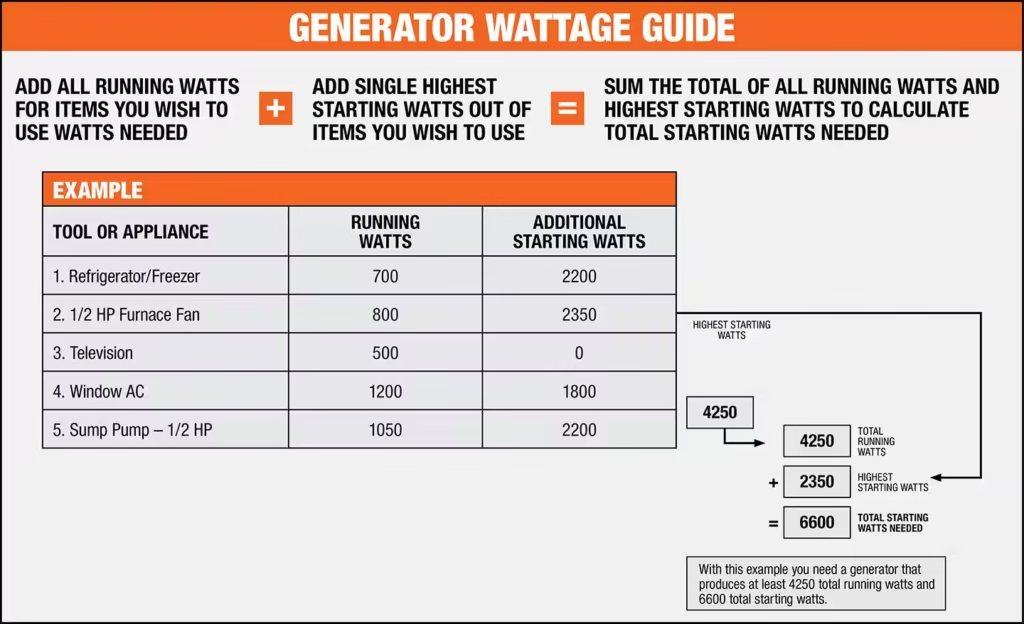
1. Running Watts vs. Starting Watts: The Core Formula
To calculate the target output capacity for your generator, you must distinguish between two fundamental electrical terms:
- Running (Continuous) Watts: The ongoing electrical power required to keep an appliance operational once it is running.
- Starting (Surge) Watts: The brief burst of extra power—often lasting 2 to 3 seconds—required by motor-driven appliances (like central AC compressors, well pumps, and refrigerators) when they first turn on.
                     GENERATOR CAPACITY SIZING FORMULA

  [ Total Running Watts of All Items ]
                  +
  [ Single Highest Starting Surge Wattage ]
                  +
  [ 20% Safety Margin Buffer ]
                  = TARGET GENERATOR CAPACITY (W)
Calculation Rule: You do not need to sum the starting surge watts of every appliance in your home simultaneously. In a typical home setup, motors cycle on independently. You only need to add the single highest starting surge wattage to your total continuous running wattage.
2. Typical Appliance Power Demands
Use the baseline electrical ratings below to estimate your total wattage requirements. Always verify the nameplate sticker on your specific equipment for exact amperage and wattage figures.
| Household Appliance | Average Running Watts | Average Starting Surge Watts |
| Central Air Conditioner (3-Ton) | $3,500\text{ W}$ | $7,000\text{ W}$ |
| Refrigerator / Freezer | $700\text{ W}$ | $2,200\text{ W}$ |
| Well Pump (1/2 HP) | $1,000\text{ W}$ | $2,100\text{ W}$ |
| Sump Pump (1/3 HP) | $800\text{ W}$ | $1,300\text{ W}$ |
| Gas Furnace Blower Motor | $800\text{ W}$ | $1,600\text{ W}$ |
| Electric Water Heater | $4,500\text{ W}$ | $4,500\text{ W}$ |
| LED Lighting (Whole House) | $300\text{ W}$ | $300\text{ W}$ |
| Wi-Fi Router & Electronics | $100\text{ W}$ | $100\text{ W}$ |
3. Quick Generator Sizing by Home Square Footage
While a detailed load calculation is the gold standard, square footage provides a useful preliminary baseline for generator output ranges:
┌─────────────────────────────────────────────────────────────┐
│             ESTIMATED GENERATOR OUTPUT BY HOME SIZE         │
└──────────────────────────────┬──────────────────────────────┘
                               │
       ┌───────────────────────┼───────────────────────┐
       ▼                       ▼                       ▼
┌─────────────┐         ┌─────────────┐         ┌─────────────┐
│ SMALL HOMES │         │ MEDIUM HOMES│         │ LARGE HOMES │
│ (< 1,500 sq)│         │(1,500-2,500)│         │(2,500+ sq ft│
├─────────────┤         ├─────────────┤         ├─────────────┤
│ 5 kW - 10 kW│         │12 kW - 20 kW│         │22 kW - 26 kW│
└─────────────┘         └─────────────┘         └─────────────┘
- Essential Emergency Backup ($5,000\text{ W} – 7,500\text{ W}$): Powers critical loads like a refrigerator, sump pump, lights, Wi-Fi, and a window AC unit. Suitable for portable generators connected through a manual transfer switch.
- Mid-Sized Whole-Home Coverage ($12,000\text{ W} – 18,000\text{ W}$): Powers all essential loads plus central air conditioning (up to 3 tons) and gas furnace heating systems.
- Complete Whole-Home Coverage ($20,000\text{ W} – 26,000\text{ W}+$): Powers large properties with 2+ central AC units, electric water heaters, electric ranges, and high-demand heavy appliances.
4. Key Factors Influencing Your Generator Selection
Beyond pure wattage calculations, consider these vital installation factors:
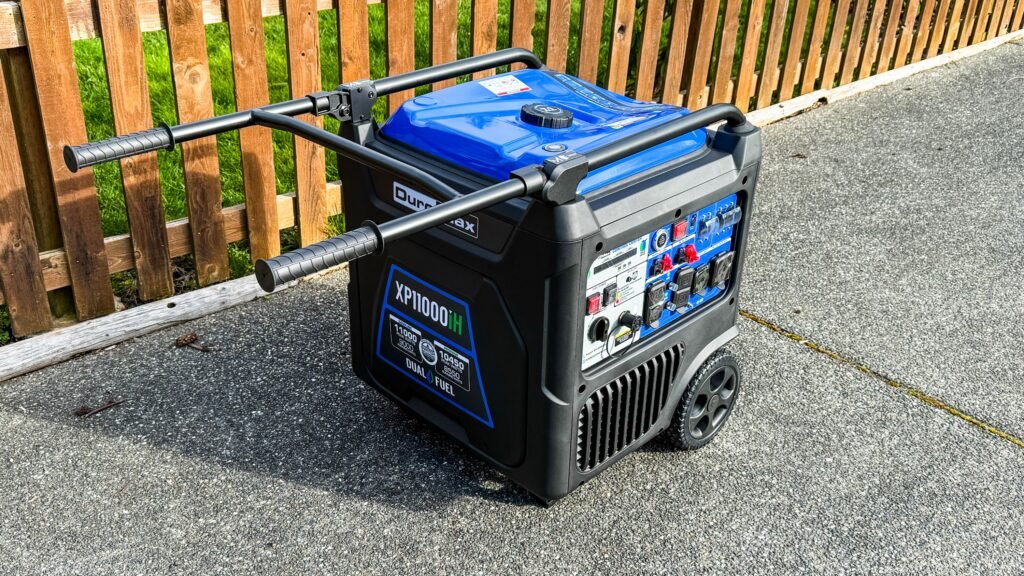
- Fuel Source & Availability: Standby generators typically run on continuous natural gas lines or liquid propane (LP) tanks. Portable generators run on gasoline or dual-fuel (gasoline/propane). Note that generators experience slight power derating when operating on natural gas compared to gasoline.
- Soft-Start Kits for Central AC: Installing an aftermarket “soft starter” on your central AC compressor reduces motor inrush starting current by up to 60-70%. This simple upgrade allows you to run your central AC on a significantly smaller, more fuel-efficient generator.
- Smart Power Management: Modern automatic transfer switches include load shedding modules. If power demand peaks, non-essential loads (like an electric dryer) are temporarily paused so the generator can handle high starting surges without tripping.
Homeowner Sizing Checklist
- [ ] List Essential Appliances: Write down every device you need during a grid disruption.
- [ ] Check Nameplate Labels: Record the running watts and starting amps for major motor-driven systems.
- [ ] Apply the 20% Safety Buffer: Add a 20% capacity margin over your calculated peak load to prevent engine strain and accommodate future additions.
- [ ] Consult a Licensed Electrician: Schedule an on-site load audit and transfer switch evaluation before purchasing equipment.
Conclusion
Accurately sizing a backup generator keeps your essential appliances operational while protecting your electrical infrastructure. By determining your true continuous wattage, accounting for motor starting surges, and adding a safety margin, you can confidently select the ideal portable or standby generator for your home.