

Replacing a traditional gas, oil, or LPG boiler with an Air-Source Heat Pump (ASHP) is one of the most effective ways for UK households to decarbonize domestic heating. However, owner-occupiers of older properties—such as Victorian terraces, 1930s semi-detached houses, or stone-built rural cottages—frequently wonder if heat pump technology can keep a draughtier home warm through British winters.
The short answer is yes: heat pumps work effectively in older homes when the system is sized correctly and basic fabric efficiency improvements are made.
This buyer guide walks you through the engineering differences between boilers and heat pumps, fabric readiness steps, radiator requirements, and government incentives.
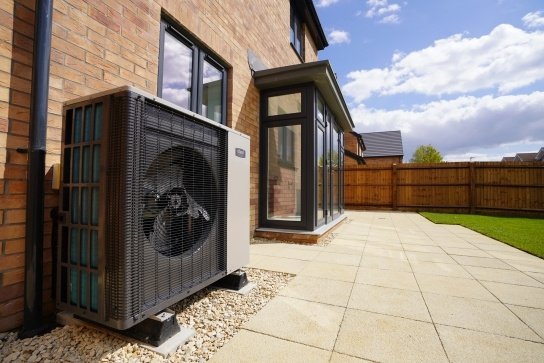
1. How Heat Pumps Differ From Traditional Boilers
Understanding the operational difference between a combi boiler and an air-source heat pump is essential for managing room temperatures effectively:
┌─────────────────────────────────────────────────────────────┐
│                 HEATING FLOW MECHANISMS                     │
└──────────────────────────────┬──────────────────────────────┘
                               │
       ┌───────────────────────┴───────────────────────┐
       ▼                                               ▼
┌───────────────────────────┐             ┌───────────────────────────┐
│     TRADITIONAL BOILER    │             │  AIR-SOURCE HEAT PUMP     │
├───────────────────────────┤             ├───────────────────────────┤
│ High Flow Temp (65–75°C)  │             │ Low Flow Temp (35–50°C)   │
│ Short, high-heat bursts   │             │ Steady, low-temperature   │
│ Rapid cycling on/off      │             │ continuous warmth         │
└───────────────────────────┘             └───────────────────────────┘
- High-Temperature Bursts vs. Low-Temperature Continuity: Gas or oil boilers deliver water to radiators at high temperatures ($65^\circ\text{C}$ to $75^\circ\text{C}$). Heat pumps run far more efficiently at lower flow temperatures ($35^\circ\text{C}$ to $50^\circ\text{C}$), providing a steady stream of background heat throughout the day.
- Seasonal Coefficient of Performance (SCOP): While a modern gas boiler converts fuel to heat at around 90% efficiency, a high-efficiency ASHP operates at a SCOP of 3.0 to 4.0. This means for every $1\text{ kWh}$ of electricity consumed, the system generates $3$ to $4\text{ kWh}$ of thermal energy.
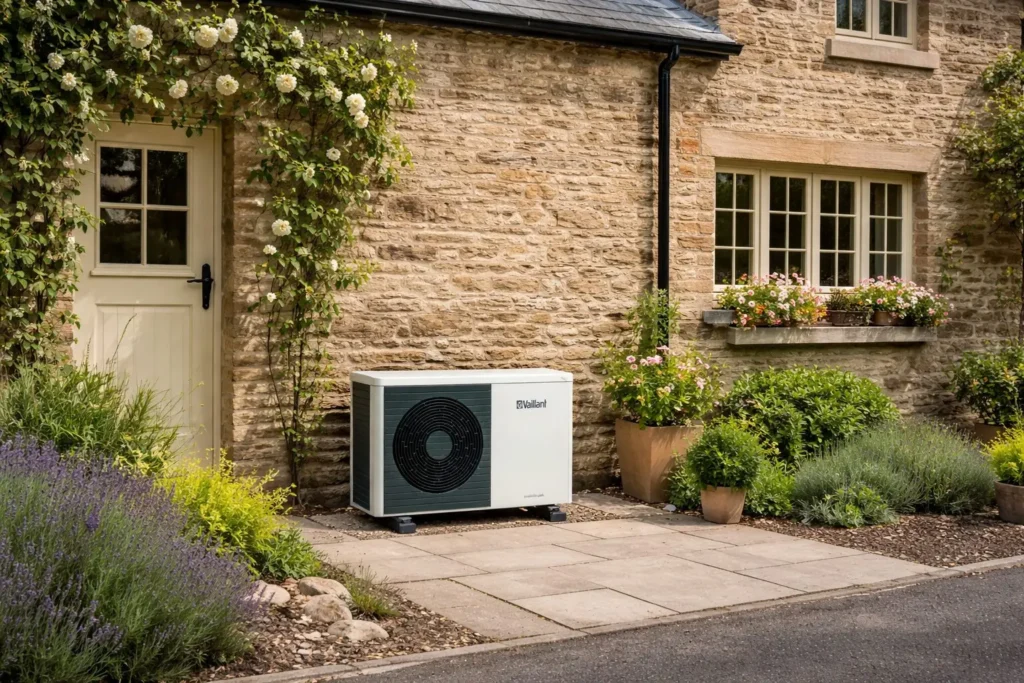
2. Preparing the Building Fabric: Fabric First
Before retrofitting an air-source heat pump into an older UK property, prioritizing a “fabric first” approach prevents unnecessary heat loss:
| Property Area | Common Issue in Older Homes | Targeted Retrofit Action |
| Loft & Roof space | Less than $100\text{ mm}$ of existing insulation | Top up loft insulation to the recommended $270\text{ mm}$ to $300\text{ mm}$ depth. |
| External Walls | Uninsulated solid brick or stone walls | Apply internal wall insulation (IWI) or external wall insulation (EWI) where appropriate. |
| Windows & Doors | Single glazing or degraded seals | Install double/secondary glazing and draught-proof timber frames. |
| Floors | Suspended timber floorboards | Seal gaps between floorboards or insulate between joists. |
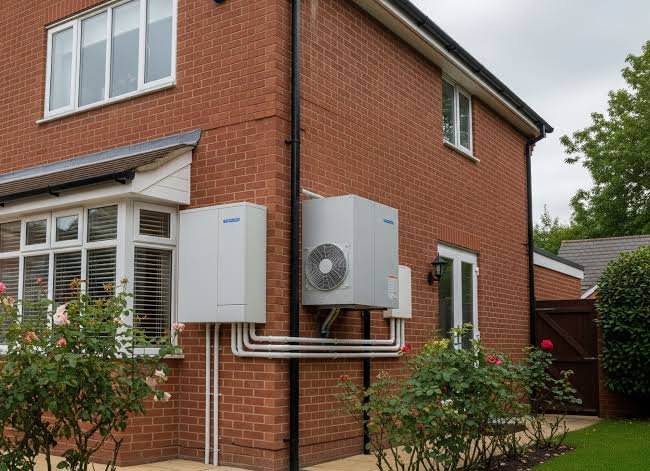
3. Radiators, Pipework, and Water Cylinders
Because an air-source heat pump operates at lower flow temperatures, heat distribution surfaces must be evaluated:
                     HEAT EMITTER COMPATIBILITY

  STANDARD BOILER RADIATORS  ───► High temp ($65^\circ\text{C}$), smaller surface area
  HEAT PUMP RADIATORS        ───► Low temp ($45^\circ\text{C}$), requires Type 22/33 or Underfloor Heating
- Radiator Upsizing: Existing radiators may need to be upgraded to larger surface area models (such as double-panel, double-convector Type 22 or Type 33 radiators) or paired with wet underfloor heating to deliver sufficient warmth at lower flow rates.
- Internal Pipework Check: Older properties with narrow microbore pipework ($8\text{ mm}$ or $10\text{ mm}$) may require pipe sections to be upgraded to standard $15\text{ mm}$ or $22\text{ mm}$ diameters to ensure adequate water flow rates.
- Hot Water Cylinder: Unlike gas combi boilers that heat water instantaneously on demand, heat pumps require a dedicated, well-insulated unvented hot water cylinder fitted with a large internal heat-exchanger coil.
4. Financial Support: The Boiler Upgrade Scheme (BUS)
UK homeowners replacing fossil-fuel heating systems can lower their upfront installation costs using government incentive programs:
Boiler Upgrade Scheme (BUS) Grant: Eligible homeowners in England and Wales can receive up to £7,500 off the upfront cost of an air-source heat pump installation. Off-grid properties replacing heating oil or LPG boilers qualify for an increased grant rate of £9,000.
Key Grant Compliance Rules
- MCS-Certified Installer: The system must be installed and commissioned by a registered Microgeneration Certification Scheme (MCS) installer who applies for the grant directly on your behalf.
- 0% VAT Rate: Heat pump installations qualify for 0% VAT on both equipment and labor.
- EPC Requirements: The property must have an Energy Performance Certificate (EPC). While specific insulation recommendations on the EPC are no longer mandatory to qualify for BUS funding, improving basic insulation remains critical for keeping running costs low.
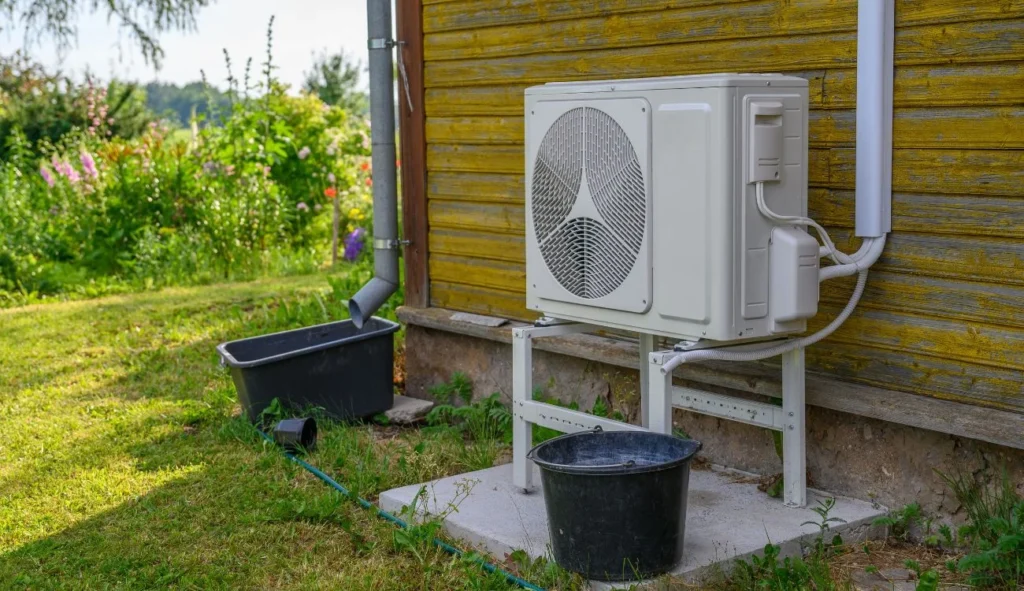
Buyer Checklist for Older UK Homes
- [ ] MCS Heat Loss Survey: Obtain a room-by-room heat loss calculation from an MCS installer to size the heat pump correctly.
- [ ] Loft & Draught Check: Verify loft insulation is at or near $300\text{ mm}$ and seal obvious draught points.
- [ ] Emitter Audit: Identify which radiators require upsizing or replacement to run at $45^\circ\text{C}$ flow temperatures.
- [ ] Space for Cylinder: Confirm adequate indoor space exists for a hot water storage cylinder.
- [ ] Grant Application: Ensure your installer includes the BUS grant discount (£7,500–£9,000) directly on your quote.
Conclusion
Installing an air-source heat pump in an older UK home is completely viable when approached with proper system design. By addressing basic draft-proofing and loft insulation, upsizing key radiators, and working with an MCS-certified installer to secure government grant funding, homeowners can transition away from fossil fuels, reduce household carbon emissions, and enjoy reliable background heating year-round.