

As extreme weather events become more frequent and grid infrastructure faces increasing strain, securing reliable backup power has shifted from a home improvement luxury to an essential investment. When evaluating whole-home resilience, most property owners narrow their choices down to two main solutions: Home Battery Backup Systems and Whole-House Standby Generators.
While both systems effectively protect your home during a power outage, they operate on fundamental technological differences—with vastly different long-term ownership dynamics, maintenance demands, and financial profiles. This guide breaks down how both technologies perform across key real-world criteria to help you determine the best fit for your energy goals.
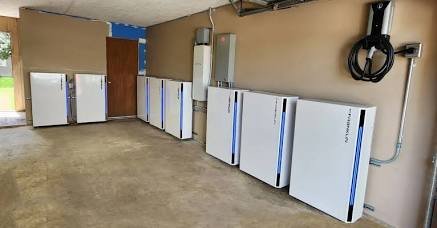
1. How They Work: Silent Energy Reservoir vs. On-Demand Engine
The primary difference between a home battery and a standby generator lies in how electricity is delivered:
┌─────────────────────────────────────────────────────────┐
│                    THE GRID FAILS                       │
└────────────────────────────┬────────────────────────────┘
                             │
         ┌───────────────────┴───────────────────┐
         ▼                                       ▼
┌─────────────────────────┐             ┌─────────────────────────┐
│   HOME BATTERY BACKUP   │             │    STANDBY GENERATOR    │
├─────────────────────────┤             ├─────────────────────────┤
│ • Solid-state LFP cells │             │ • Internal combustion   │
│ • Seamless (<10ms)      │             │ • 10-to-30 sec delay    │
│ • Zero direct emissions │             │ • Burns gas or propane  │
│ • Silent operation      │             │ • 60–80 dB motor noise  │
└─────────────────────────┘             └─────────────────────────┘
Home Battery Backup (Lithium Iron Phosphate / LFP)
A home battery does not create energy; it acts as a high-capacity reservoir. It continuously charges from the utility grid or an rooftop solar panel array. When the main power grid fails, an intelligent micro-inverter senses the drop and automatically isolates your home from the grid (“island mode”) in less than 10 milliseconds.
- Key Advantage: The transition is instantaneous—your lights, Wi-Fi routers, home office setup, and sensitive electronics will not flicker or restart.
Whole-House Standby Generator
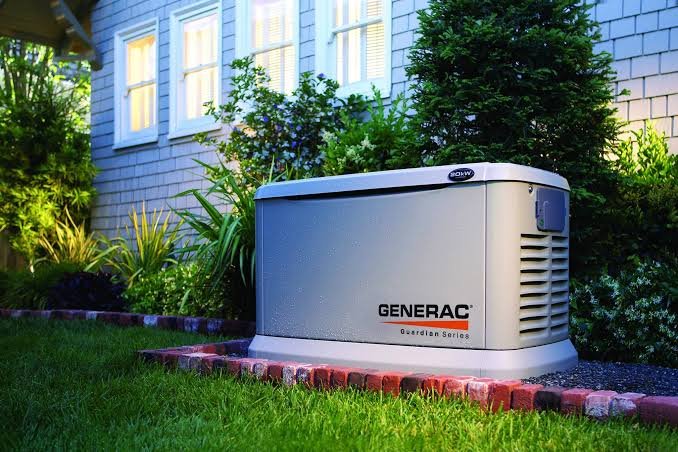
A standby generator is an internal combustion engine mounted permanently outside your home and wired directly into your electrical panel via an Automatic Transfer Switch (ATS). When grid power drops, the system detects the loss, cranks the engine, reaches operating speed, and transfers power—a process that typically takes 10 to 30 seconds.
- Key Advantage: Rather than relying on stored capacity, it generates fresh electricity on demand continuously as long as fuel is supplied.
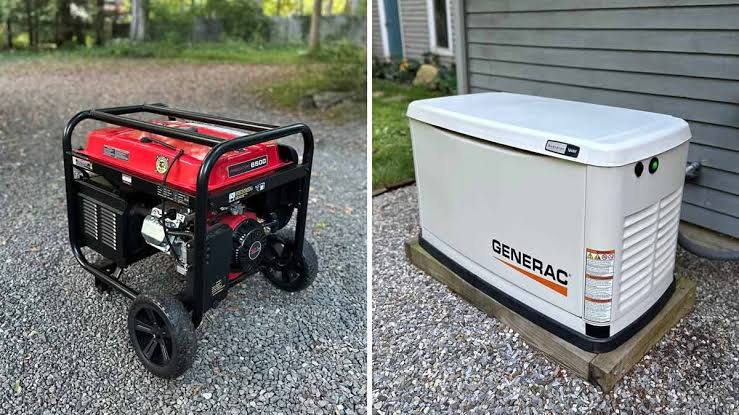
2. Direct Feature Comparison
| Feature Category | Home Battery Backup | Standby Generator |
| Fuel / Energy Source | Stored Grid Electricity or Solar Power | Natural Gas (NG) or Liquid Propane (LP) |
| Outage Response Time | Instantaneous (< 10 ms) | 10 to 30 Seconds |
| Noise Level | 100% Silent (0 dB) | 60 – 80 dB (similar to a lawnmower) |
| Emissions & Safety | Zero localized emissions; safe indoors or in garage | Produces CO & exhaust; strictly outdoor installation |
| Maintenance | Minimal (software updates, passive cooling) | Engine oil changes, filters, spark plugs, exercising |
| Daily Value (Non-Outage) | High (Peak Shaving / Time-of-Use bill savings) | Zero (Sits idle until a power outage occurs) |
| Runtime Potential | 4–24 hrs baseline (Unlimited if paired with Solar) | Continuous for days/weeks as long as fuel flows |
3. Runtime & Power Output Realities
Runtime capability depends heavily on your region’s typical outage profile and your household’s total electrical load.
       TYPICAL RUNTIME CAPACITY BY SYSTEM SETUP

  Single Home Battery (10-15 kWh) ───► 4 to 12 Hours (Essential Loads Only)
  Battery + Solar Array           ───► Multi-Day / Indefinite (Sunlight Dependent)
  Standby Generator (Gas / LP)    ───► Multi-Day / Weeks (Continuous Fuel Supply)
- For Short to Medium Outages (2 to 24 Hours): A home battery is highly efficient. Paired with a smart panel or essential load sub-panel, it manages critical appliances—refrigerators, medical devices, lighting, and communications—without draining energy on non-essential zones.
- For Solar Homeowners: When paired with rooftop solar panels, a battery creates a self-sustaining microgrid. The panels run your home and recharge the battery by day; the battery runs your home by night.
- For Extended Multi-Day Grid Failure: If your area experiences prolonged, severe weather events lasting several days with overcast skies, a standby generator remains the undisputed champion for continuous heavy load delivery (such as running central 5-ton HVAC systems continuously).
4. The “365-Day” Value Proposition: Peak Shaving & Off-Grid Utility
One of the largest factors driving adoption toward home energy storage is its ability to perform daily cost optimization even when the grid is functioning normally:
Time-of-Use (TOU) Energy Arbitrage: In utility regions with dynamic time-of-use rates, electricity costs significantly more during peak late-afternoon and evening hours. Smart battery systems automatically charge when grid electricity is cheapest (or from free solar power) and discharge during expensive peak hours, directly lowering monthly electric bills year-round.
Standby generators, by contrast, offer no return on investment during normal grid conditions; they sit idle until an emergency occurs.
5. Maintenance, Lifespan, and Operating Noise
- Operating Noise: A generator running at 65 to 75 decibels outside a bedroom window or in a tight suburban lot can disrupt sleep and cause tension with HOA guidelines. Battery backup systems operate with no moving internal components and emit zero sound.
- Ongoing Upkeep: Standby generators require routine mechanical maintenance—such as changing motor oil and filters every 100 to 200 hours of runtime—along with periodic short exercise cycles to keep the engine healthy. Modern LFP home batteries operate virtually maintenance-free, backed by standard 10-year manufacturer warranties.
Final Decision Framework
Use this simple breakdown to determine which solution best aligns with your home’s setup:
Choose a Home Battery Backup System if:
- [ ] You already have rooftop solar panels or plan to install solar energy in the future.
- [ ] You experience frequent short-to-medium outages (under 24 hours).
- [ ] You live in a region with Time-of-Use (TOU) utility rate plans and want lower electric bills.
- [ ] You require silent operation, instant power switching, and zero direct emissions.
Choose a Standby Generator if:
- [ ] Your area is prone to long, multi-day grid shutdowns caused by severe weather or ice storms.
- [ ] You have access to a reliable, piped natural gas line or a large liquid propane tank.
- [ ] You must continuously run high-draw loads (multiple central AC units, well pumps) without load management.
Conclusion
Both home battery backup systems and standby generators provide peace of mind and energy security when local utility power fails. If your priority is maximum continuous runtime for heavy loads during extended multi-day crises, a standby generator remains a time-tested solution. However, if you prefer a silent, zero-emissions solution that integrates seamlessly with solar power and actively saves money on your daily electricity bill, a home battery storage system represents the modern standard in home energy management.