

Upgrading your home’s HVAC air filter is one of the most effective ways to target indoor air quality and eliminate airborne contaminants like fine dust, wildfire smoke, pet dander, and mold spores. With environmental agencies and health organizations recommending higher filtration efficiency, many homeowners automatically reach for a MERV 13 air filter.
However, simply dropping a high-efficiency filter into a system designed for a standard fiberglass pad can create unexpected issues. Before upgrading, you need to understand the relationship between filtration efficiency, airflow resistance, and your specific heating and cooling equipment.
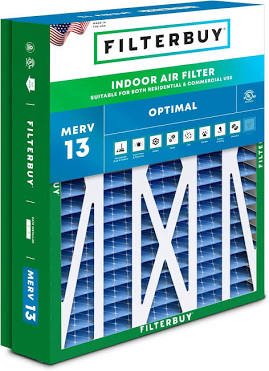
What Does MERV 13 Mean?
MERV stands for Minimum Efficiency Reporting Value. It is a standardized scale ranging from 1 to 16 that measures how effectively an air filter traps microscopic airborne particles.
                     AIRBORNE PARTICLE CAPTURE BY MERV RATING

  MERV 8   ───► Traps 3.0 – 10.0 Micron Particles (Pollen, Dust Mites, Lint)
  MERV 11  ───► Traps 1.0 – 3.0 Micron Particles (Pet Dander, Fine Dust, Auto Emissions)
  MERV 13  ───► Traps 0.3 – 1.0 Micron Particles (Smoke, Bacteria, Virus Carriers)
- MERV 8: Captures large residential dust and pollen. Excellent for basic equipment protection and minimal airflow impact.
- MERV 11: Traps smaller allergens, fine pet dander, and dust mite debris.
- MERV 13: Highly efficient filter media capable of capturing microscopic particles down to 0.3 microns—including wildfire smoke, smog, cooking aerosols, and airborne bacteria.
The Physics Trade-Off: Air Filtration vs. Static Pressure
To capture sub-micron particles, MERV 13 filters utilize a much tighter weave of synthetic fibers. While this creates cleaner air, it also increases static pressure—the resistance to airflow within your duct system.
Think of static pressure as blood pressure for your HVAC system. If resistance rises too high, your blower motor must work harder to pull air through the system.
┌─────────────────────────────────────────────────────────────┐
│                 HIGH STATIC PRESSURE IMPACT                 │
└──────────────────────────────┬──────────────────────────────┘
                               │
       ┌───────────────────────┴───────────────────────┐
       ▼                                               ▼
┌───────────────────────────┐             ┌───────────────────────────┐
│     BLOWER MOTOR STRAIN   │             │   THERMAL & EFFICIENCY    │
├───────────────────────────┤             ├───────────────────────────┤
│ • Overheated fan motor    │             │ • Frozen AC evaporator    │
│ • Higher monthly energy   │             │   coils in summer         │
│   bills                   │             │ • Overheating furnace     │
│ • Accelerated motor wear  │             │   heat exchanger in winter│
└───────────────────────────┘             └───────────────────────────┘
When an HVAC system is suffocated by excessive pressure drop, several performance issues can emerge:
- Reduced Airflow (CFM): Rooms far from the air handler become difficult to heat or cool, creating uneven temperature zones.
- Coil Freezing: In summer, reduced airflow across the air conditioner’s evaporator coil causes refrigerant temperatures to drop, turning humidity into a block of ice.
- Furnace Short-Cycling: In winter, restricted airflow traps heat inside the furnace, tripping high-limit safety switches and shutting the system down prematurely.
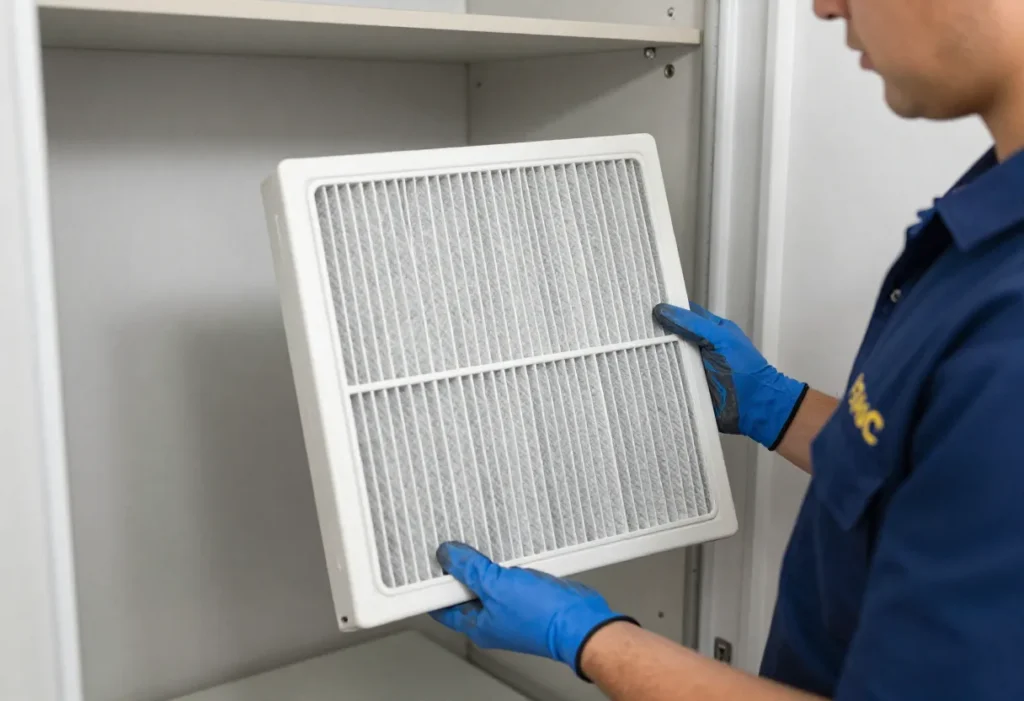
Filter Thickness Matters: 1-Inch vs. 4-Inch MERV 13
If you want to use a MERV 13 filter safely, filter depth is often more critical than the MERV rating itself.
| Filter Profile | Surface Area | Pressure Drop Impact | Average Service Life |
| 1-Inch Pleated MERV 13 | Low (Tightly packed pleats) | High—Can strain older single-speed blowers | 30 to 60 Days |
| 2-Inch Pleated MERV 13 | Moderate | Medium—Better airflow than 1-inch models | 60 to 90 Days |
| 4-Inch Deep-Pleat MERV 13 | Very High (Expands surface area) | Low—Produces less pressure drop than a 1-inch MERV 8 | 6 to 12 Months |
Key Takeaway: A 4-inch deep-pleated MERV 13 filter spreads incoming air across a vastly larger surface area. This design allows high particle capture without choking the blower motor.
How to Determine If Your System Can Handle MERV 13
Before installing a MERV 13 filter, run through this quick compatibility audit:
1. Identify Your Blower Motor Type
- Permanent Split Capacitor (PSC) Motors: Found in older or baseline HVAC systems. These single-speed motors operate on a fixed curve. High-resistance 1-inch MERV 13 filters can significantly reduce total airflow and overheat these motors.
- Electronically Commutated Motors (ECM): Modern variable-speed blower motors automatically adjust speed to maintain proper airflow. While ECMs can easily handle MERV 13 filters, high static pressure will cause them to draw more electricity.
2. Measure Total External Static Pressure (TESP)
Most residential HVAC systems are engineered for a maximum TESP budget of 0.50 inches of water gauge (in. w.g.). During routine maintenance, ask an HVAC technician to measure your system’s static pressure. If your baseline reading without a filter is already 0.40 in. w.g., adding a dense 1-inch MERV 13 filter will push the system past safe operating limits.
Pre-Purchase Checklist
- [ ] Blower Type Check: Identified whether your air handler uses a PSC or variable-speed ECM motor.
- [ ] Filter Cabinet Size: Measured your filter housing to see if a thicker 2-inch or 4-inch cabinet media cabinet can be installed.
- [ ] Static Pressure Margin: Confirmed with an HVAC technician that ductwork resistance is low enough to accommodate higher MERV ratings.
- [ ] Replacement Schedule: Committed to changing 1-inch filters every 30 to 60 days to prevent dirt buildup from spiking airflow resistance.
Conclusion
A MERV 13 filter is a powerful tool for capturing fine particulate matter, smoke, and microscopic allergens. However, superior indoor air quality should never come at the expense of your HVAC system’s mechanical health. If your system features a modern ECM blower motor or a deep 4-inch filter cabinet, MERV 13 filters will deliver exceptional performance. For older systems with thin 1-inch slots, consider upgrading to a media cabinet or utilizing a standalone HEPA air purifier to protect both your lungs and your equipment.