

Rising electricity bills are driving millions of homeowners to explore clean energy alternatives. The PM Surya Ghar: Muft Bijli Yojana is a flagship government initiative designed to make residential solar adoption accessible, affordable, and seamless. By providing direct central financial assistance (subsidies) and facilitating low-interest bank loans, the scheme aims to power over 10 million households across the country with rooftop solar systems.
Whether your goal is to lower monthly power bills, secure reliable backup power, or reduce your carbon footprint, this comprehensive guide covers everything you need to know about eligibility, system sizing, subsidies, and the registration process.
What is PM Surya Ghar: Muft Bijli Yojana?
The PM Surya Ghar scheme encourages residential electricity consumers to install grid-connected rooftop solar (RTS) systems. Under this initiative:
- Free Monthly Units: Households can generate up to 300 units of free solar electricity per month, significantly slashing or completely eliminating utility bills.
- Direct Bank Transfer Subsidies: The Government of India provides standardized Central Financial Assistance (CFA), transferred directly into the applicant’s bank account upon successful system commissioning and net meter installation.
- Collateral-Free Financing: Partnered nationalized banks offer collateral-free solar loans at concessional interest rates for residential capacity additions.
How Net Metering Works
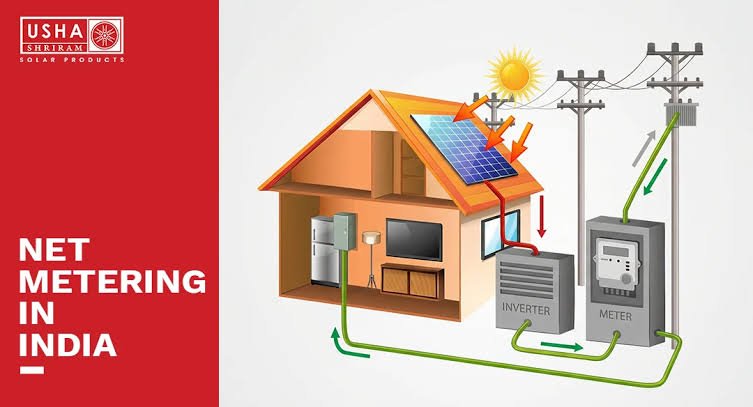
A crucial component of grid-connected rooftop solar is net metering. Unlike off-grid systems that rely on expensive battery banks, net-metered systems remain connected to your local power distribution company (DISCOM) grid.
┌─────────────────────────────────────────────────────────────┐
│                    NET METERING WORKFLOW                    │
└──────────────────────────────┬──────────────────────────────┘
                               │
       ┌───────────────────────┴───────────────────────┐
       ▼                                               ▼
┌───────────────────────────┐             ┌───────────────────────────┐
│   DAYTIME GENERATION      │             │   NIGHTTIME CONSUMPTION   │
├───────────────────────────┤             ├───────────────────────────┤
│ • Solar panels produce    │             │ • Solar generation stops  │
│   clean electricity       │             │ • Home draws electricity  │
│ • Home uses energy first  │             │   from DISCOM grid        │
│ • Surplus units exported  │             │ • Exported units credit   │
│   to DISCOM grid          │             │   against nighttime draw  │
└───────────────────────────┘             └───────────────────────────┘
At the end of your billing cycle, your DISCOM bills you only for the net electricity consumed (Total Imported Units minus Total Exported Units). If you export more than you import, surplus credits roll over into subsequent billing cycles according to your state discom regulations.
Eligibility Criteria for Homeowners
Before registering on the national portal, ensure your household meets the basic eligibility requirements:
- Residential Category: The applicant must be an Indian citizen owning a residential property with a suitable roof space. (Commercial, industrial, and agricultural connections are excluded from residential CFA benefits).
- Electricity Connection: Must possess an active electricity connection under a residential DISCOM account with no pending dues.
- Roof Ownership & Space: Unshaded roof space capable of handling solar module mounting structures (typically requiring around 100 sq. ft. per 1 kW of installed solar capacity).
- Domestic Content Requirement (DCR): To qualify for the government subsidy, the installed solar modules must be DCR-compliant (manufactured domestically in India using local solar cells).
Solar Capacity Sizing & Subsidy Structure
The central subsidy structure scales according to system capacity, encouraging households to match solar panel installation with their actual monthly power consumption.
| System Capacity (kW) | Average Monthly Power Generation | Ideal For Household Consumption |
| 1 kW System | ~120 – 150 Units | Low consumption homes (1-2 fans, LED lights, TV, basic appliances) |
| 2 kW System | ~240 – 300 Units | Average mid-sized homes (1 Split AC, refrigerator, washing machine) |
| 3 kW to 10 kW System | 360+ Units | Large residences (Multiple ACs, geysers, EV charging infrastructure) |
Note on Subsidies: Central Financial Assistance is capped at 3 kW for individual residential households. While homeowners can install larger systems (up to their approved DISCOM connected load), the maximum subsidy amount remains capped at the 3 kW slab limit.
Step-by-Step Application Process
1.Registration on National Portal:Keep your DISCOM consumer number and registered mobile number ready.
Visit the official PM Surya Ghar National Portal. Select your State, your local Electricity Distribution Company (DISCOM), and enter your Consumer Account Number to register your profile.
2.Submit Rooftop Solar Application:Feasibility approval from local DISCOM.
Log into your newly created account and apply for Rooftop Solar installation. Submit your roof details and desired system capacity (kW). The local DISCOM will review the grid feeder capacity and issue Technical Feasibility Approval.
3.Vendor Selection & Installation:Select registered empanelled solar vendors only.
Once feasibility approval is granted, choose a registered vendor from the portal’s empanelled list. Execute an agreement with the vendor to install a DCR-compliant solar system along with MNRE-approved inverters and mounting structures.
4.Net Meter Installation & Inspection:DISCOM inspection of wiring and grounding.
After installation, submit the system completion details and vendor work report on the portal. A DISCOM representative will inspect the plant, verify DCR compliance, and install the bi-directional net meter.
5.Commissioning & Subsidy Dispersal:Direct Bank Transfer (DBT).
Upon successful inspection, a Commissioning Certificate is generated online through the portal. Upload your bank account details and canceled cheque. The approved subsidy amount will be directly credited to your bank account within a few weeks.
Homeowner Checklist Before Applying
- [ ] Verify Roof Sun Exposure: Ensure the rooftop receives unobstructed sunlight from 9:00 AM to 4:00 PM without heavy tree or building shadows.
- [ ] Check Sanctioned Load: Check your electricity bill to confirm your sanctioned load matches or exceeds your desired solar capacity. (If necessary, apply for a load enhancement with your DISCOM).
- [ ] Confirm DCR Modules: Verify with your vendor that the solar panels carry valid DCR certification tags required for subsidy release.
- [ ] Match Name Records: Ensure the name on your electricity bill matches the name on your bank account and ID proof to prevent DBT payment delays.
Conclusion
The PM Surya Ghar: Muft Bijli Yojana offers a streamlined, transparent framework for homeowners to transition to clean energy. By taking advantage of direct central subsidies, collateral-free solar loans, and net metering benefits, residential consumers can lower their long-term living expenses while contributing directly to India’s renewable energy goals.